If some rooms in your home are always hotter than others, your energy bills keep increasing, or your HVAC system seems to run constantly, the problem may not be the air conditioner itself.
It could be the ductwork.
In many Dallas–Fort Worth homes, ducts are installed in extremely hot attics. Over time, flexible ducts can deteriorate, insulation can become damaged, connections can separate, and poor duct sizing can restrict airflow.
So how much does it cost to replace residential ductwork in North Texas?
For many DFW homes, a complete residential ductwork replacement typically falls somewhere around:
💰 $3,500–$9,500
The actual price can be lower for a partial replacement or considerably higher for a large home, two HVAC systems, difficult attic access, major redesign, new plenums, additional returns, or replacement of registers and boots.
Let’s break down what affects the price—and when complete duct replacement actually makes sense.
🏠 1. How Much Does Ductwork Replacement Cost in DFW?
There isn’t one fixed price because every duct system is different.
A small single-system home with straightforward attic access requires much less material and labor than a large two-story home with two HVAC systems and 20+ duct runs.
General DFW Planning Range
| Type of Work | Typical Planning Range |
|---|---|
| 🔧 One or several damaged duct sections | $400–$1,500+ |
| 🌀 Significant partial duct replacement | $1,500–$3,500+ |
| 🏠 Complete duct replacement – typical home | $3,500–$9,500 |
| 🏡 Large / complex / multiple-system home | $9,500+ |
| 🌬️ Added return duct or airflow modification | Depends on duct size and access |
| 🔩 New supply or return plenum | Depends on system size and configuration |
These are general planning ranges, not fixed prices.
The only accurate way to price ductwork is to inspect the existing system and determine exactly what should be repaired, replaced, resized, or redesigned.
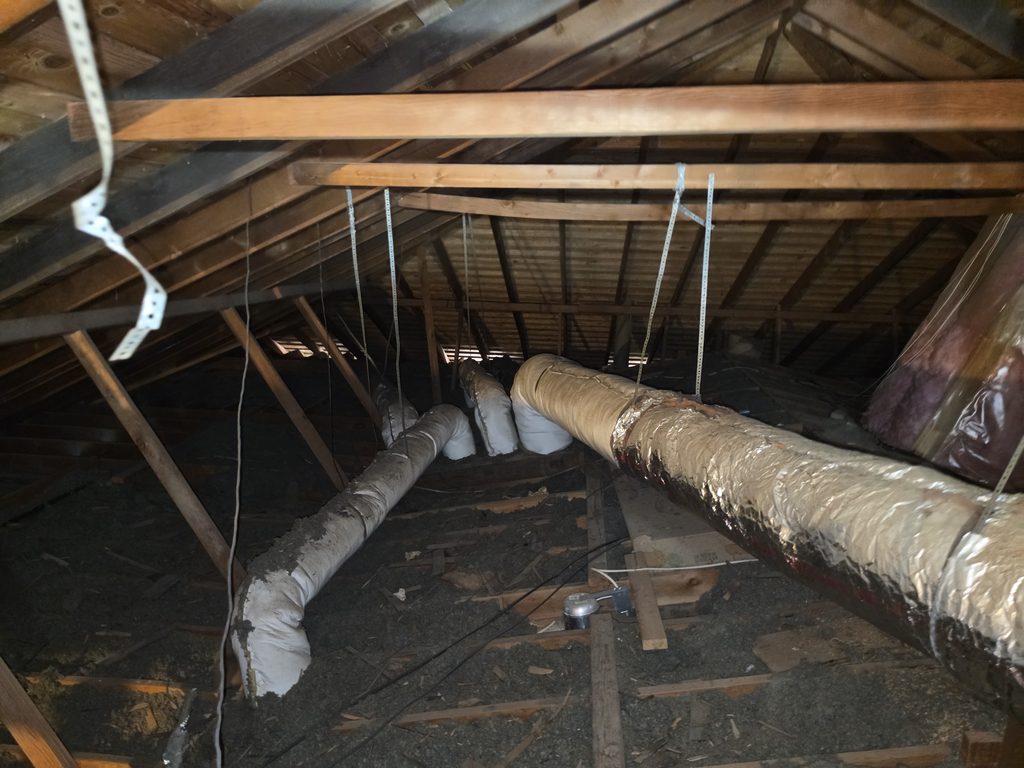
Caption:
Replacing deteriorated ductwork can improve airflow, comfort, and overall HVAC system performance.
📏 2. What Determines the Cost of Ductwork Replacement?
Several factors have a much bigger impact on the final price than the cost of the flexible duct itself.
🏠 Home Size
A larger house usually requires:
- More duct runs
- Larger trunk ducts
- More return-air capacity
- Additional fittings
- More insulation
- More labor
However, square footage alone doesn’t determine ductwork cost.
Two 2,000-square-foot homes can have completely different duct layouts.
❄️ HVAC System Size
A 5-ton HVAC system typically needs larger ducts than a 2-ton system.
Larger ducts cost more and require more attic space.
The number and size of the supply ducts must also provide enough airflow for the equipment.
🌬️ Number of Supply Runs
Every bedroom, bathroom, kitchen, living area, and other conditioned space may require its own branch duct.
More branches mean:
💰 More material
🔧 More fittings
⏱️ More installation time
🌡️ More balancing work
🔄 Return-Air System
Returns are especially important.
We frequently find HVAC systems where the supply side is adequate but the return ductwork is undersized.
That can create high static pressure and restrict airflow through the HVAC system.
Sometimes a duct replacement project should include:
- Larger return duct
- Additional return
- New return plenum
- Larger filter cabinet
- Improved return grille
Simply replacing the old supply ducts without correcting an undersized return may leave the original airflow problem unresolved.
🔥 3. Why DFW Attic Ductwork Can Be Expensive to Replace
Most North Texas homes don’t have convenient basements where the ductwork is easy to reach.
Instead, much of the duct system is installed in the attic.
And during the Texas summer, that attic can become an extremely difficult working environment.
Attic duct replacement may require technicians to work around:
- Roof framing
- Insulation
- Electrical wiring
- Plumbing
- Low-clearance sections
- HVAC equipment
- Exhaust ducts
- Gas piping
- Structural supports
Accessibility can dramatically change the amount of labor required.
Easy attic
✅ Open access
✅ High roof
✅ Equipment near attic entrance
✅ Straightforward duct runs
Difficult attic
❌ Low roof clearance
❌ Deep insulation
❌ Long crawl distances
❌ Multiple HVAC systems
❌ Complicated duct routing
Two houses of the same size can therefore have very different duct replacement costs.
🌡️ 4. How Do You Know If Your Ductwork Needs Replacement?
Old ductwork doesn’t automatically need to be replaced.
Some systems only need repairs, sealing, balancing, or modification.
However, complete replacement may make sense when the duct system has extensive deterioration.
Common warning signs include:
🌡️ Some rooms stay much hotter or colder than others
💨 Weak airflow from multiple vents
💡 HVAC system runs for very long periods
💰 Unusually high cooling bills
🌀 Flexible ducts are crushed, kinked, or collapsed
🕳️ Duct insulation is torn or deteriorated
🔌 Duct connections have separated
💧 Condensation appears on ductwork
🐭 Rodents or other pests have damaged ducts
🏚️ The duct system is old and deteriorated throughout the attic
If only one duct is damaged, replacing the entire duct system usually isn’t necessary.
The condition of the whole system should determine the scope of work.
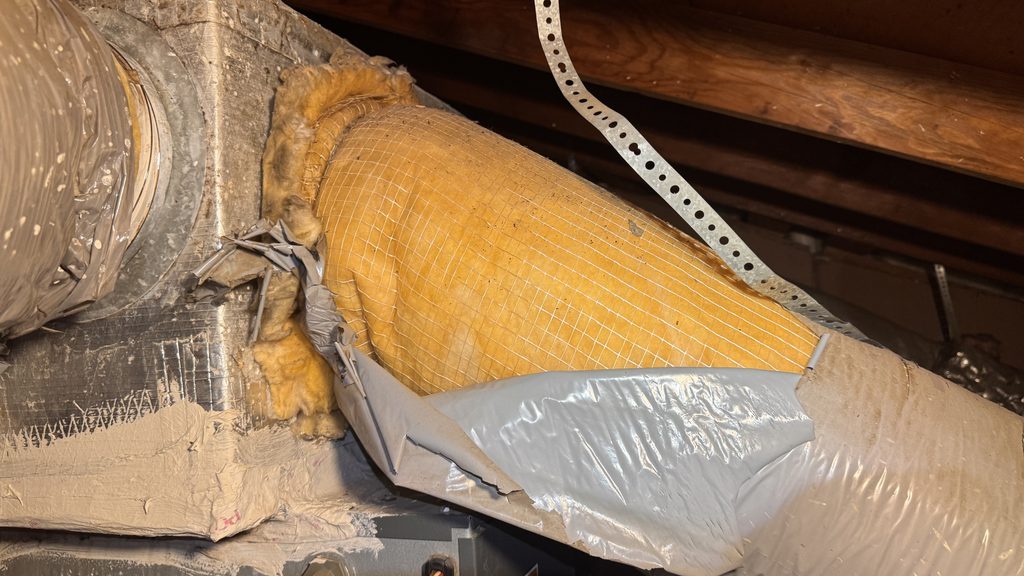
Caption:
Damaged, compressed, or disconnected flexible ductwork can significantly reduce airflow to individual rooms.
🔧 5. Repair the Ductwork or Replace It?
This is one of the most important decisions.
🟢 Repair may make sense when:
- Only one or two ducts are damaged
- Connections have become loose
- A duct has been accidentally crushed
- Most insulation remains in good condition
- The duct sizing is otherwise correct
- The system has good overall airflow
🔴 Replacement may make more sense when:
- Many ducts are damaged
- Insulation is deteriorating throughout the system
- Duct sizing is incorrect
- The system has poor airflow in many rooms
- Multiple previous repairs have been made
- The duct layout is poorly designed
- Major HVAC replacement is already being performed
Quick comparison
| Situation | Repair | Replace |
|---|---|---|
| One disconnected duct | ✅ | |
| One damaged branch | ✅ | |
| Several crushed ducts | Maybe | ✅ |
| Old deteriorated insulation throughout attic | ✅ | |
| Incorrect duct sizing | ✅ / redesign | |
| Poor system layout | ✅ / redesign | |
| Minor joint leakage | ✅ | |
| Major airflow problems throughout home | Maybe | ✅ Evaluate |
💨 6. Duct Replacement Is Not Just “Replacing the Tubes”
A good duct replacement project should address the air distribution system, not simply remove old flex duct and install new flex duct of exactly the same size.
If the original system was poorly designed, duplicating it will duplicate the problem.
The project may need to evaluate:
📐 Duct sizing
Are the ducts large enough for the required airflow?
🔄 Return airflow
Can enough air return to the HVAC equipment?
⚖️ Air balancing
Are some rooms receiving too much airflow while others receive too little?
📦 Supply and return plenums
Are the existing plenums correctly sized and properly sealed?
🔧 Takeoffs and dampers
Can airflow to individual branches be adjusted?
📏 Duct length
Long duct runs create more resistance than short runs.
➰ Bends and compression
Flexible duct should not be crushed or installed with excessive bends.
These details can make the difference between simply having new ducts and having a duct system that actually performs better.
📊 7. Why Duct Size Matters
Your HVAC system needs to move a specific volume of air.
Airflow is commonly measured in:
CFM — Cubic Feet per Minute
If the ducts are too small, the blower must work against greater resistance.
This can contribute to:
- Weak airflow
- Excessive static pressure
- Blower noise
- Reduced system capacity
- Frozen evaporator coils in some situations
- Increased motor load
- Poor comfort
Installing a larger air conditioner without evaluating existing ductwork can make these problems worse.
Bigger AC ≠ better airflow
A 5-ton air conditioner connected to ductwork designed for a much smaller system cannot deliver its full performance simply because the equipment is larger.
The duct system needs to support the airflow required by the HVAC equipment.
⚖️ 8. What Is Static Pressure?
Static pressure is essentially the resistance the HVAC blower has to overcome while moving air through the system.
Think of it like blood pressure for your HVAC system.
A system can experience excessive static pressure because of:
- Undersized return ducts
- Small supply ducts
- Dirty filter
- Restrictive filter
- Closed dampers
- Crushed ducts
- Poorly designed fittings
- Improper blower setup
LOW / NORMAL RESISTANCE
🟢 Air moves freely
🟢 Good airflow
🟢 Lower blower stress
EXCESSIVE RESISTANCE
🔴 Reduced airflow
🔴 More blower work
🔴 Increased noise
🔴 Comfort problems
Replacing ductwork gives you an opportunity to correct these problems instead of simply installing new material.
🏡 9. How Much Does Ductwork Replacement Cost by Home Size?
Square footage can provide a rough starting point, but it should never be used as the only pricing method.
A general planning comparison might look like this:
| Home | Typical Duct Complexity |
|---|---|
| 1,000–1,500 sq. ft. | Smaller single-system layout |
| 1,500–2,200 sq. ft. | Typical single-system DFW home |
| 2,200–3,000 sq. ft. | More branches / possibly multiple returns |
| 3,000+ sq. ft. | Larger system, zoning, or multiple HVAC systems possible |
A 1,700-square-foot home can occasionally cost more to re-duct than a 2,200-square-foot house if attic access is significantly more difficult.
That’s why we prefer evaluating the actual system rather than quoting ductwork based only on square footage.
💰 10. Why Are Some Ductwork Quotes So Different?
One company may quote $3,500.
Another may quote $8,000.
That doesn’t necessarily mean one company is dramatically overpriced.
They may be quoting completely different scopes of work.
Before comparing estimates, check whether they include:
| Item | Quote A | Quote B |
|---|---|---|
| Remove old ducts | ? | ? |
| New insulated ducts | ? | ? |
| New plenums | ? | ? |
| New takeoffs | ? | ? |
| Manual balancing dampers | ? | ? |
| New register boots | ? | ? |
| New grilles/registers | ? | ? |
| Return-air modifications | ? | ? |
| Duct sealing | ? | ? |
| Support/hangers | ? | ? |
| Airflow balancing | ? | ? |
| Cleanup and disposal | ? | ? |
Compare scope—not just total price.
A quote for replacing only flexible ducts shouldn’t be directly compared with a proposal that also includes new plenums, takeoffs, dampers, returns, boots, and airflow corrections.
🧰 11. What Should Be Included in a Quality Duct Installation?
A well-installed residential duct system may include:
✅ Properly sized insulated flexible or metal ducts
✅ Proper duct supports and hangers
✅ Sealed duct connections
✅ Properly sized supply and return plenums
✅ Quality takeoffs
✅ Manual balancing dampers where appropriate
✅ Correctly sized return-air pathways
✅ Proper filter arrangement
✅ Airflow balancing
✅ Inspection of overall system static pressure
The goal isn’t simply to make every room receive “some air.”
The goal is to distribute airflow appropriately throughout the home.
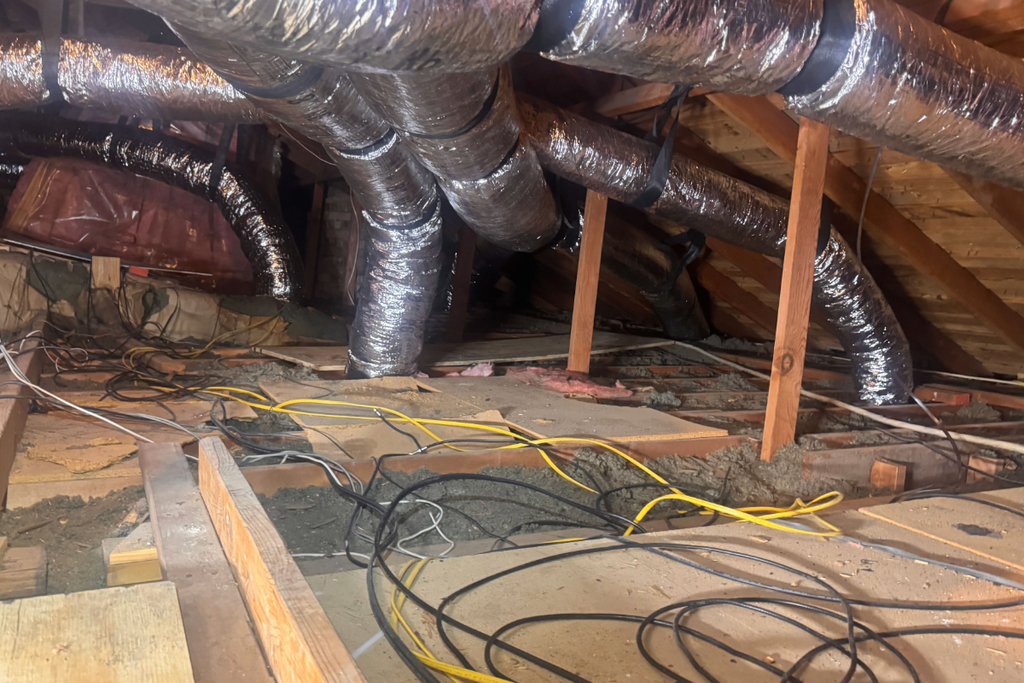
Show clean runs, proper supports, dampers, insulated plenums, and organized duct routing.
Caption:
Properly supported and sized ductwork helps provide consistent airflow throughout the home.
❄️ 12. Should You Replace Ductwork When Replacing the AC?
Not automatically.
If the existing duct system is correctly sized, sealed, insulated, and in good physical condition, replacing it simply because you’re installing a new air conditioner may not make sense.
However, AC replacement is an excellent time to evaluate ductwork.
Especially if you’re changing:
- Equipment tonnage
- Blower type
- System efficiency
- Single-stage to variable-speed equipment
- Furnace or air handler
- Zoning configuration
The new equipment may have different airflow requirements.
A premium AC connected to bad ductwork is still connected to bad ductwork.
Spending more money on high-efficiency equipment while ignoring severe airflow restrictions may prevent the new system from delivering the comfort and performance you expected.
🌡️ 13. Why Is One Room Always Hotter Than the Others?
This is one of the most common duct-related complaints.
If one bedroom is consistently 5–10°F warmer than another room, possible causes include:
- Undersized branch duct
- Very long duct run
- Crushed flex duct
- Closed or improperly adjusted damper
- Poor supply-register location
- Excessive solar load
- Inadequate return-air pathway
- Duct leakage
- Insulation problems
- Poor overall system balance
The solution isn’t always installing a larger air conditioner.
Sometimes the correct solution is modifying the duct system and rebalancing airflow.
🔄 14. Supply Ducts vs. Return Ducts
Both sides of the system matter.
🔵 Supply ducts
Deliver conditioned air from the HVAC system into individual rooms.
🟠 Return ducts
Bring air back to the HVAC equipment to be cooled or heated again.
You cannot continuously push 1,600 CFM into a home if the return system can only comfortably bring back significantly less air.
Supply and return airflow must work together.
An oversized supply system with an undersized return can still create poor HVAC performance.
💡 15. Can New Ductwork Reduce Your Electric Bill?
Potentially—but don’t expect a guaranteed percentage.
If existing ducts are severely leaking, poorly insulated, disconnected, or restricting airflow, correcting those problems can reduce wasted heating and cooling energy.
However, actual savings depend on:
- Condition of old ductwork
- Location of ducts
- HVAC efficiency
- Home insulation
- Thermostat settings
- Air leakage
- Weather
- Equipment runtime
The main goals should be:
🌡️ Better comfort
💨 Correct airflow
🛠️ Better HVAC operation
⚡ Reduced energy waste
Energy savings can be an additional benefit when the old duct system is performing poorly.
🛑 16. When Duct Replacement May NOT Solve the Problem
Hot rooms don’t always mean bad ductwork.
Comfort problems can also result from:
- Incorrect AC size
- Low refrigerant
- Dirty evaporator coil
- Blower problems
- Poor attic insulation
- Air leakage
- Large windows
- High solar exposure
- Zoning problems
That’s why diagnosing the home before replacing thousands of dollars of ductwork is important.
Airmatics Tip
We prefer identifying the reason for the airflow or comfort problem first. Then we can determine whether the right solution is repair, balancing, duct modification, additional return air, or complete replacement.
✅ 17. Is Ductwork Replacement Worth It?
It can be—when the existing duct system is actually the problem.
Complete duct replacement can make sense when:
✔️ Existing ducts are extensively damaged
✔️ Airflow is poor throughout the home
✔️ Duct sizing is incorrect
✔️ Insulation is deteriorated
✔️ Multiple ducts have been repaired repeatedly
✔️ You’re remodeling the home
✔️ You’re installing HVAC equipment that requires different airflow
✔️ The existing system was poorly designed from the beginning
But replacing good ductwork simply because it’s old isn’t always necessary.
The condition and performance of the system should drive the decision.
❓ Frequently Asked Questions
How much does it cost to replace ductwork in Dallas–Fort Worth?
For many residential DFW projects, complete duct replacement can fall around $3,500–$9,500, depending on home size, HVAC capacity, number of duct runs, attic accessibility, material, returns, plenums, and the amount of redesign required.
Smaller partial repairs or replacements can cost considerably less, while large or complex multi-system homes can exceed this range.
How long does ductwork replacement take?
Many straightforward residential attic projects can be completed within one or two working days, while large or complex duct systems may require more time.
Do I need to move out during duct replacement?
Usually not. However, the HVAC system normally needs to remain off for part of the installation.
Does all flexible ductwork need to be replaced after 15 or 20 years?
No. Age alone doesn’t determine whether ductwork needs replacement. Physical condition, insulation, leakage, sizing, and airflow performance matter more.
Can you replace only one duct?
Yes. If one branch is damaged and the rest of the system is in good condition, replacing only that section may be the most practical solution.
Should I replace my registers and grilles too?
Not necessarily. Existing registers and grilles can often remain if they’re correctly sized and in good condition. Replacement may make sense when they’re damaged, undersized, heavily corroded, or part of an airflow modification.
Should ductwork be replaced when I replace my AC?
Only when necessary. The duct system should be evaluated to determine whether it can properly support the new HVAC equipment.
Will bigger ducts give me more airflow?
Not automatically. Duct sizing must be coordinated with system airflow, static pressure, branch design, registers, returns, and blower performance.
Can ductwork cause my AC to freeze?
Severe airflow restriction can contribute to an evaporator coil becoming too cold and freezing. However, refrigerant problems and other mechanical issues can produce similar symptoms.
Can new ductwork fix a hot bedroom?
It can if the problem is caused by improper duct sizing, damaged ducts, leakage, poor balancing, or an inadequate return-air pathway. Other heat-load issues should also be evaluated.
🔧 Need Ductwork Replacement in Dallas–Fort Worth?
If your home has weak airflow, uncomfortable rooms, damaged ducts, or an HVAC system that never seems to cool evenly, don’t assume you automatically need a larger air conditioner.
The duct system may be part of the problem.
Airmatics provides residential ductwork inspection, repair, airflow modification, balancing, and complete duct replacement throughout Plano, Frisco, Allen, McKinney, Dallas, and surrounding North Texas communities.
We’ll evaluate your existing duct system and explain whether repair, modification, or complete replacement makes the most sense.