Why is my AC not cooling?

- Hearing the steady hum of your system while sweating in your living room creates a specific kind of panic. You feel air moving, yet the thermostat refuses to drop—a frustrating phenomenon often called “Ghost Cooling.” Before worrying about expensive replacement costs, note that industry data indicate that simple adjustments, rather than complex repairs, resolve a significant portion of cooling failures. Effective troubleshooting starts with checking the basics before calling a pro.
- Many people assume that blowing air equals working machinery, but your unit is actually a heat remover, not just a fancy fan. Think of the system like a sponge: if it can’t soak up warmth, it simply circulates hot air. If you are wondering why your AC is not getting cold, the problem is likely a disruption in the heat exchange cycle. The following guide covers the most common zero-dollar fixes for an ac running but not cooling to get your home comfortable again, safely
Thermostat and Breaker Quick Fixes
Before assuming the worst, ensure your control panel isn’t tricking you. If your AC unit is not blowing cold air, the fan setting is the usual suspect. When set to “On,” the fan blows constantly—even when the outdoor cooling unit is resting—pushing humidity and warm air back into your rooms. While professional thermostat calibration for home cooling aids precision, these manual checks solve most immediate issues:


- Mode: Ensure it is set strictly to “Cool.”
- Fan: Switch to “Auto” so the fan stops when the cooling cycle ends.
- Temperature: Drop the setpoint 5 degrees to force a response.
Next, check your electrical panel for a “tripped” switch. Unlike a blown fuse which physically melts and needs replacing, a breaker just flips to a center position. To master how to reset an AC circuit breaker, find the misaligned switch, flip it firmly to “Off,” then back to “On.”
Warning: If the breaker trips again instantly, stop immediately; this indicates a dangerous electrical short. If the power is stable but airflow remains weak, your system might be suffocating.
The $20 Fix: How Air Filters Kill Your Cooling
A dirty air filter acts like a thick mask over your system’s “face.” If the unit cannot inhale enough warm air from your house, it cannot exhale cool air back into your rooms. This lack of airflow is the most common reason for an air conditioner not blowing cold air; without enough warm air passing over the internal coils, they get too cold and can eventually freeze into a block of ice, halting the cooling process entirely.
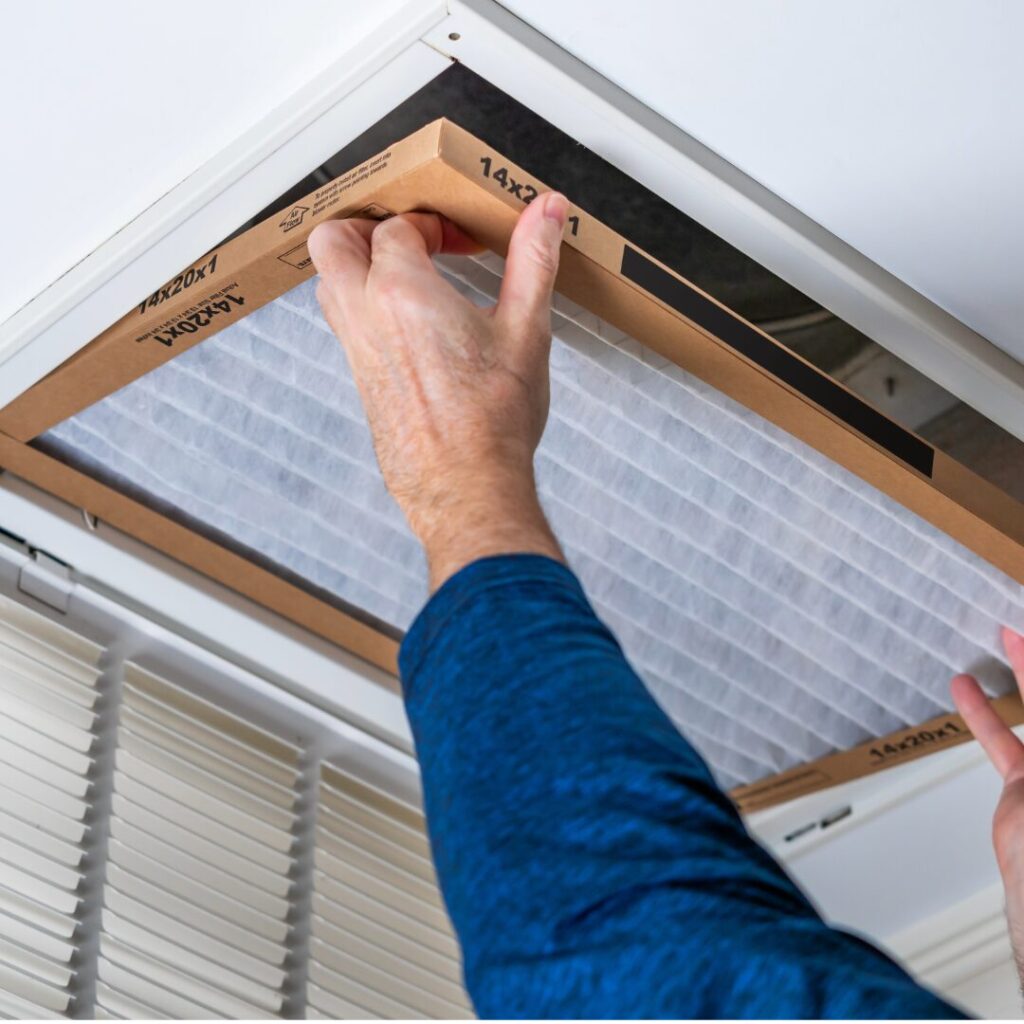
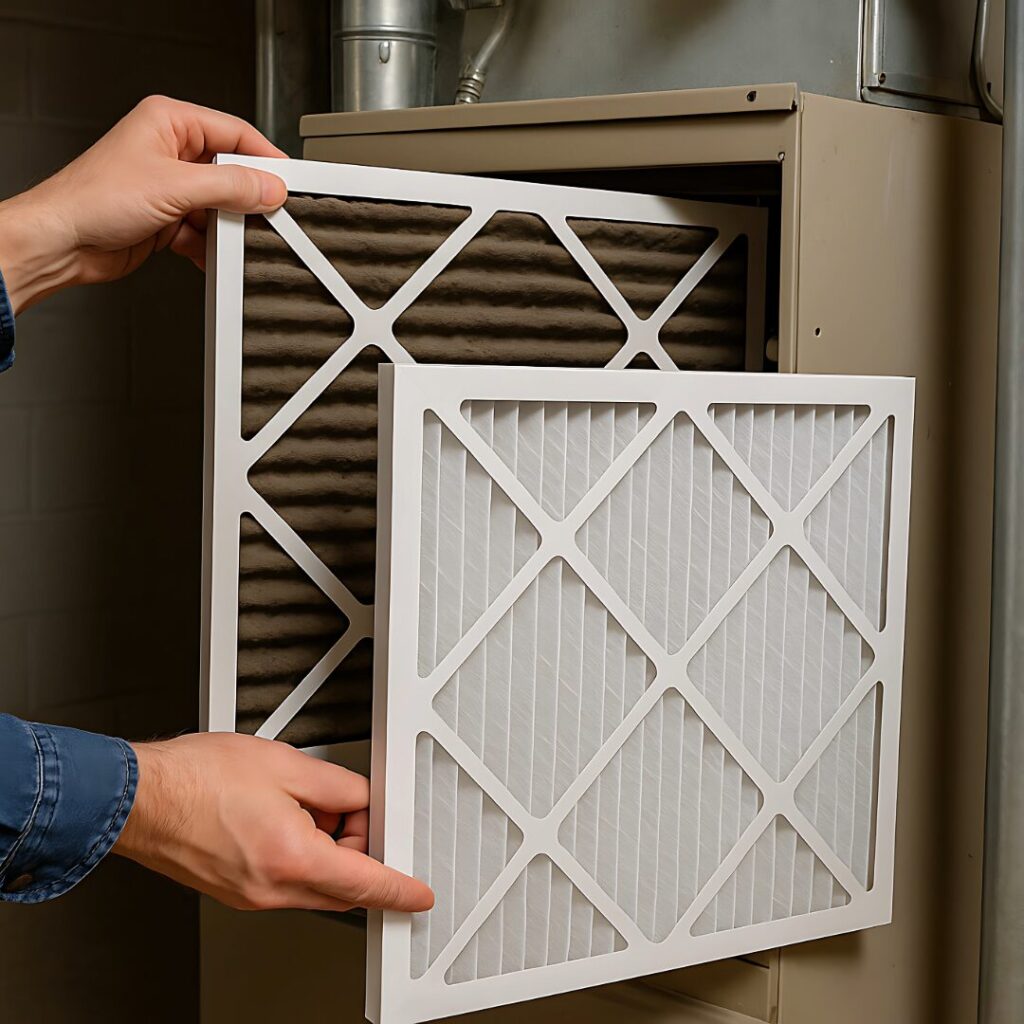
Selecting the wrong replacement can be just as damaging as leaving a dirty one in place. High MERV ratings—often found on expensive “allergen-blocking” filters—create resistance similar to breathing through a narrow straw. This added pressure strains standard blower motors and negatively affects the air filter impact on cooling performance, so it is safer to stick to mid-range pleated filters (MERV 5–8) unless your system is built for high-efficiency options.
Inspect your filter immediately to rule it out. Look for these clear indicators before worrying about complex repairs:
- Visible gray dust completely coating the fabric pleats.
- Airflow from vents feels weak even when the fan sounds loud.
- Whistling noises coming from the return air grate.
If a fresh filter doesn’t explain why is my ac not blowing cold, the blockage is likely affecting the outdoor equipment instead.
Cleaning Your Outdoor Condenser Without a Pro
Just as a car radiator releases engine heat, your outdoor unit dumps heat pulled from your home. Its thin aluminum fins are designed to release thermal energy quickly. When these fins get clogged with pollen or dirt, the unit suffocates, often explaining why is my ac unit not cooling my house by recycling heat rather than removing it.


Restoring airflow requires learning how to clean outdoor condenser unit fins safely. With power disconnected, gently spray water through the fins using a standard garden hose. Never use a pressure washer, which can crush the delicate aluminum and ruin the unit’s ability to “breathe.” Also, maintain two feet of clearance around the equipment so hot air escapes easily.
If the exterior is clean but you still have central ac not blowing cold air, the issue may be hidden inside. Poor airflow often causes internal temperatures to drop too low, eventually creating a solid block of ice on the indoor coil.
Thawing Out: Fixing Frozen Evaporator Coils
It seems contradictory, but finding ice on your indoor unit or the copper pipes is a primary reason why is the aircon not cooling during a heatwave. Your system acts like a thermal sponge designed to soak up heat from your home’s air. If that sponge cannot “breathe” because a dirty filter is blocking airflow, the coil temperature drops below freezing. Once ice forms, it acts as an insulator, stopping the coil from absorbing any warmth and leaving you with a running system that produces no cold air.

Fixing ac frozen evaporator coils requires patience rather than force—never try to chip the ice away, as you could puncture delicate tubing. Instead, follow this safe thaw protocol immediately:
- Switch your thermostat mode from “Cool” to “Off” to stop the compressor.
- Turn the fan setting from “Auto” to “On” to force warm home air over the ice.
- Check your air filter and replace it immediately if it looks gray or clogged.
This melting process can take anywhere from two to 24 hours depending on the severity of the buildup. If you replace the filter and the unit freezes again shortly after restarting, the issue is likely a refrigerant leak rather than simple airflow. This specific type of air conditioner not cooling signals that it is time to stop DIY efforts and bring in professional help.
When to Give Up and Call the HVAC Tech

- Listen to your outdoor unit; if you hear a loud buzzing followed by a click and silence, the system is struggling to start. This behavior usually indicates a failing start capacitor or early hvac compressor failure symptoms. While online tutorials might suggest testing ac capacitor with multimeter, these components act like high-powered batteries that hold a lethal electrical charge even when the power is disconnected, making this a repair strictly for licensed professionals who can handle high voltage safely.
- You should also check for a faint hissing noise near the coils, which sounds like a punctured tire leaking air. This is one of the most reliable signs of low ac refrigerant and indicates a physical leak in the sealed copper tubing. Unlike gas in a car, your AC doesn’t consume refrigerant during normal operation, so needing a refill always requires a technician to find the hole, braze it shut, and recharge the system properly.
Your AC Survival Action Plan
You have turned a stressful heatwave into a manageable plan. By checking airflow and power issues yourself, you can confidently navigate the balance of ac repair cost vs replacement without fear. Use this central air conditioning troubleshooting guide to stay ahead of the heat.
- ‘Beat the Heat’ Maintenance Checklist:
- Replace filters every 1–3 months.
- Keep outdoor foliage 2 feet back.
- Rinse the outdoor unit annually.
- Check drain lines for water buildup.
- Schedule spring professional tune-ups.

Regular care acts as your hvac seasonal maintenance checklist, potentially cutting energy bills by 15%. Your AC isn’t a mystery anymore; it’s a partner that just needs room to breathe.