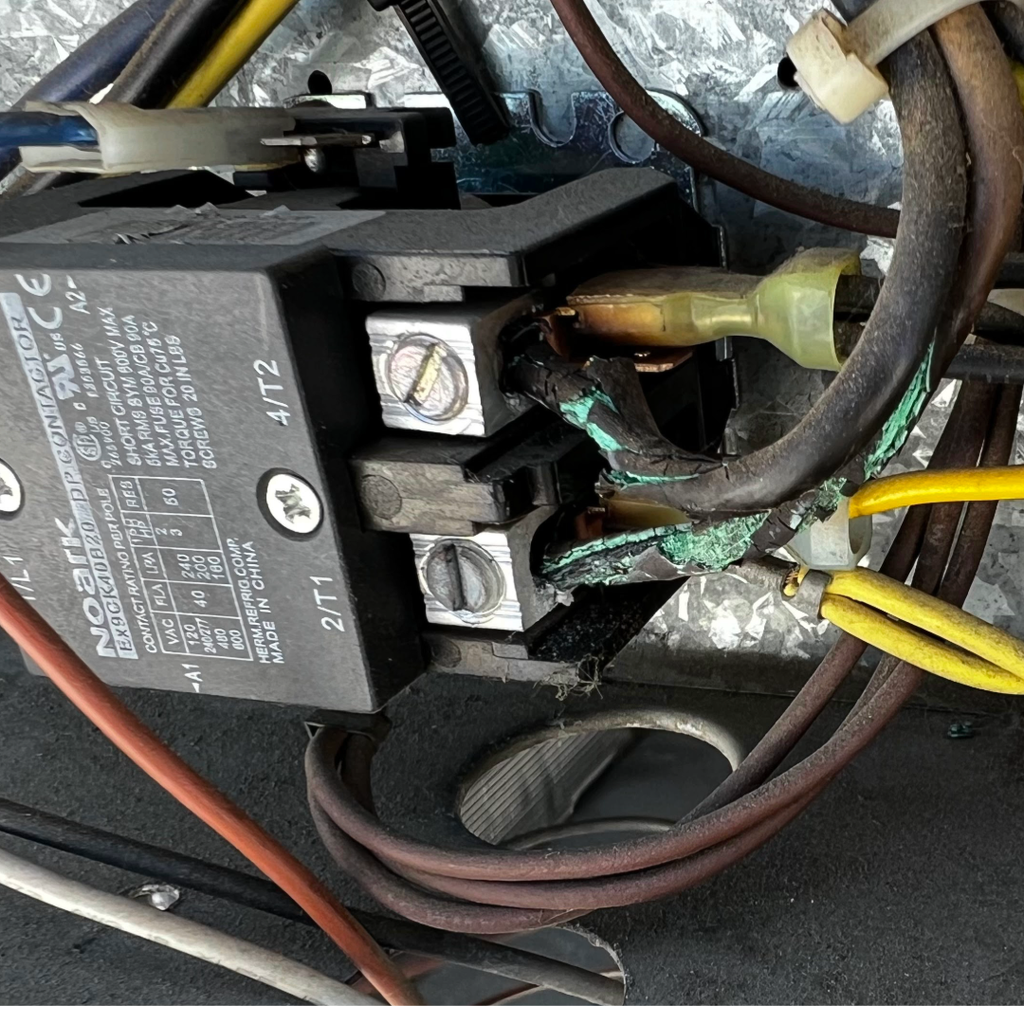
Your thermostat is set to COOL, but your outdoor air conditioner won’t start. Or perhaps you’re experiencing the opposite problem: your AC keeps running even after you’ve turned the thermostat OFF.
One possible cause is a faulty AC contactor.
This small electrical component controls power to your outdoor air-conditioning equipment. When it fails, your AC may stop cooling, make unusual buzzing noises or continue running when it should shut down.
The good news? A failed contactor is usually repairable and doesn’t automatically mean you need a new air conditioner.
Let’s look at the warning signs, what causes contactors to fail and how to determine whether your AC needs professional repair.
⚡ 1. What Is an AC Contactor, and How Does It Work?
Think of an AC contactor as an electrically operated switch that turns power to your outdoor equipment on and off.
In many conventional residential air conditioners, here’s how it works:
Thermostat calls for cooling
Your home needs cooling.
Contactor receives the control signal
Typically 24 volts AC.
Electrical contacts close
Power reaches the outdoor equipment.
Compressor and condenser fan start
Your AC begins cooling.
Once your home reaches the desired temperature, the thermostat normally stops requesting cooling. The contactor opens, disconnecting power from the connected components.
If the contactor fails to close, your outdoor unit may not start. If the electrical contacts become stuck together, it may continue running when it should stop.
Note: Modern inverter and communicating systems may use different electrical control arrangements.
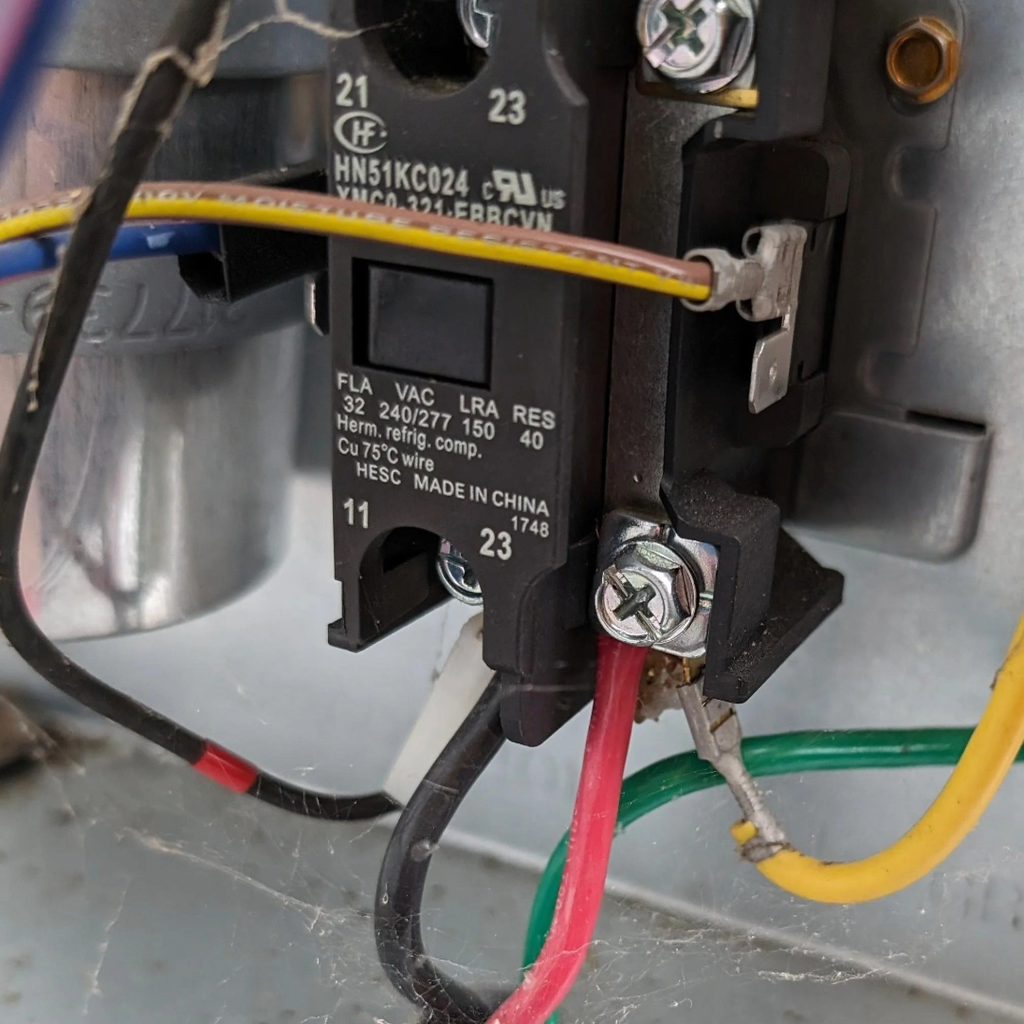
🔍 2. Five Warning Signs of a Bad AC Contactor
An AC contactor can fail in several ways. Sometimes the warning signs are obvious, while other problems develop gradually.
1. Your outdoor AC won’t turn on
The thermostat calls for cooling, but nothing happens outside. Your indoor blower may continue running, circulating warm air throughout the house.
A contactor that fails to close can prevent the outdoor equipment from starting.
2. Your outdoor unit won’t shut off
You turn off the thermostat, but the outdoor compressor and fan keep running.
This can happen when the contactor’s electrical contacts become welded together, preventing the contactor from opening normally.
3. Buzzing or repeated clicking
A single click when your AC starts or stops is normally nothing to worry about.
However, loud buzzing, rapid clicking or constant chattering can indicate a contactor or electrical control problem.
4. Burning smell or overheated connections
Worn contacts and loose electrical connections can generate excessive heat.
A burning smell, visible discoloration or melted insulation requires immediate attention.
5. Intermittent AC operation
Your air conditioner works normally one day but refuses to start the next.
Worn contacts, a failing contactor coil or unstable control voltage may cause intermittent operation.
Important: These symptoms don’t automatically mean the contactor is defective. Capacitor problems, wiring issues and other HVAC failures can produce similar results.
🔥 3. Why Do AC Contactors Fail?
Every time your air conditioner starts and stops, the contactor’s electrical contacts engage and disengage.
Over time, this repeated operation contributes to mechanical wear and electrical deterioration.
Here are some common causes.
| Cause | What happens |
|---|---|
| 🔄 Normal wear | Repeated electrical switching gradually wears the contacts. |
| ⚡ Electrical arcing | Electrical contacts develop pitting or become welded together. |
| 📉 Low control voltage | The contactor may chatter or fail to engage properly. |
| 🔥 Loose connections | Increased electrical resistance can produce excessive heat. |
| 💧 Dirt and moisture | Contamination may interfere with normal operation. |
| ⚙️ Coil failure | The electromagnetic coil stops operating correctly. |
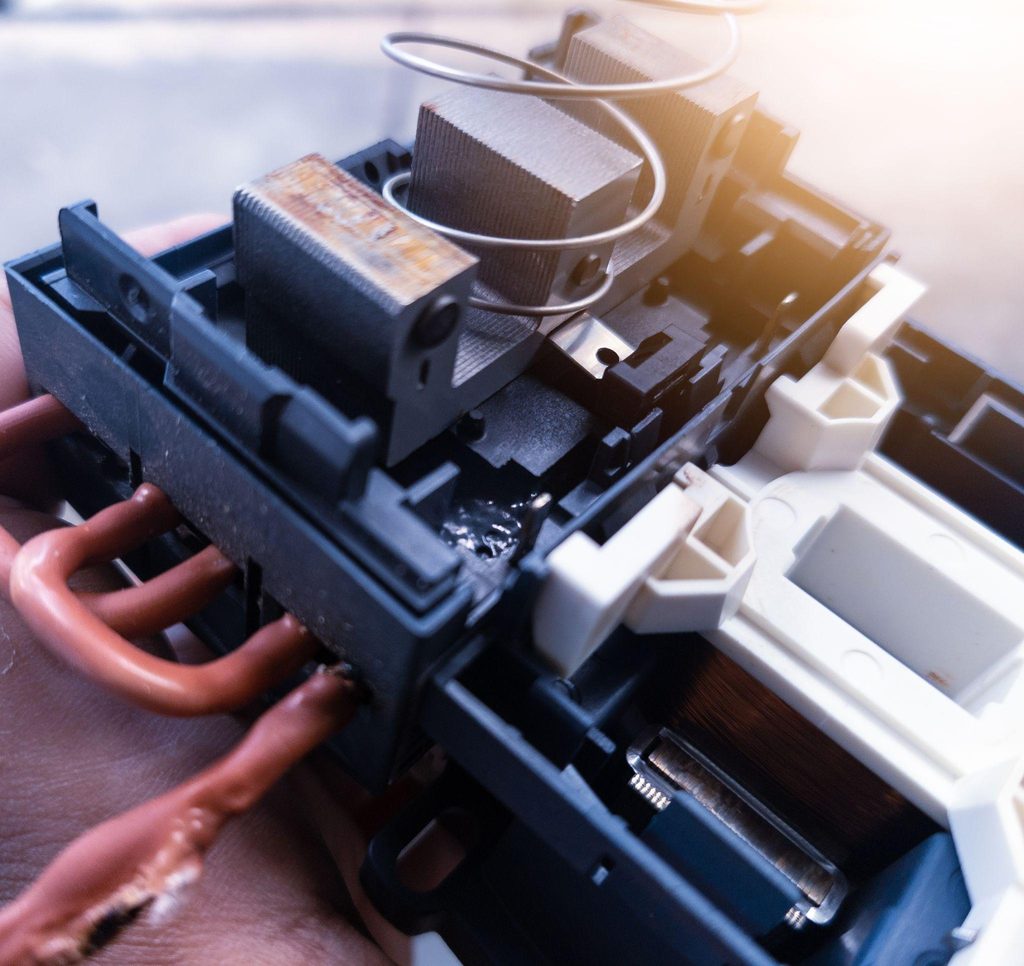
What are welded contacts?
Each time a contactor opens or closes, a small electrical arc may occur.
Over time, repeated arcing can damage the contact surfaces. Under certain conditions, those surfaces may become stuck together.
When this happens, the contactor can remain electrically closed even after the thermostat stops requesting cooling.
Airmatics Tip
Replacing a contactor without identifying the underlying electrical problem may result in another failure. For example, unstable control voltage can cause even a new contactor to chatter.
🌀 4. Why Does My Outdoor AC Keep Running When the Thermostat Is Off?
Before assuming the contactor has failed, it’s important to determine which part of your HVAC system is actually running.
| 🟢 May be normal | 🔴 Potential problem |
|---|---|
| Indoor blower continues running | Outdoor condenser continues running |
| Thermostat fan setting is ON | Thermostat is OFF |
| Indoor air continues circulating | Outdoor compressor and fan remain energized |
| May be normal thermostat operation | May indicate welded contacts or a control problem |
If your thermostat’s fan setting is ON, the indoor blower may continue running even after the cooling cycle has ended.
However, if the outdoor condenser continues operating well after you’ve turned the thermostat OFF, it could indicate a stuck contactor or another control-system problem.
What should you do?
Turn the thermostat OFF and allow for any normal shutdown delay. If the outdoor condenser continues running, switch off its dedicated circuit breaker if you can safely identify and access it, and contact an HVAC technician.
⚖️ 5. Bad AC Contactor vs. Bad Capacitor
These two electrical components are frequently confused because both can cause your outdoor AC to stop working.
However, their functions are very different.
AC contactor: Controls the electrical power supplied to outdoor components.
AC capacitor: Provides the electrical characteristics needed for certain compressor and fan motors to start and operate.
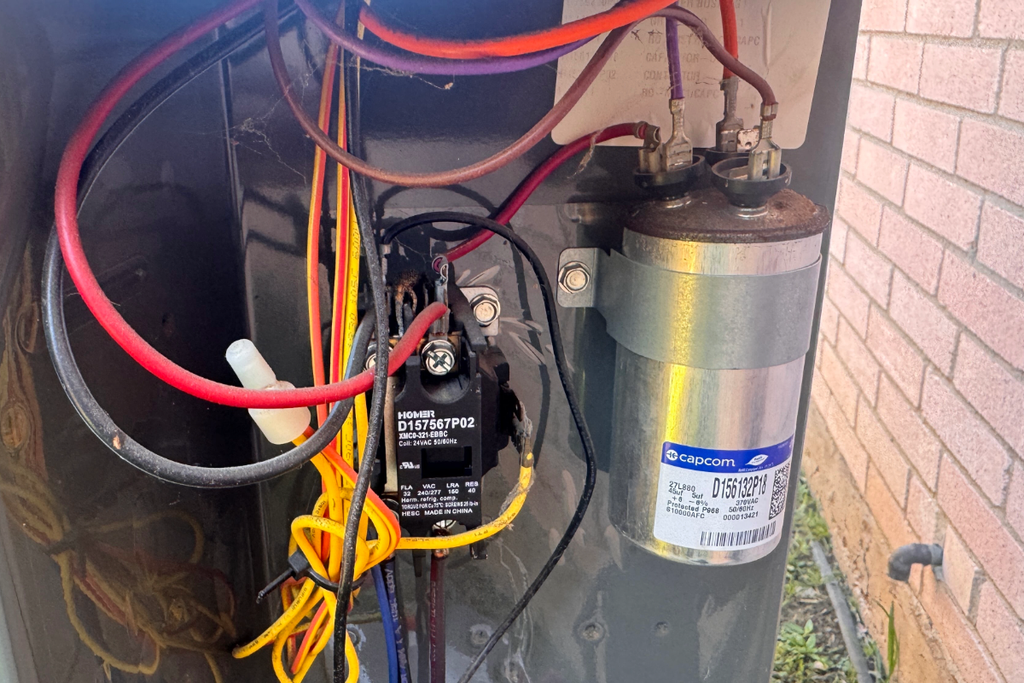
Quick comparison
| Symptom | Bad contactor | Bad capacitor |
|---|---|---|
| Outdoor AC won’t start | ✅ Possible | ✅ Possible |
| Electrical chattering | ✅ Common clue | ❌ Not typical |
| Motor hums but won’t start | Possible | ✅ Common clue |
| Outdoor unit won’t shut off | ✅ Possible | ❌ Not typical |
| Compressor struggles to start | Possible | ✅ Possible |
| Visibly damaged component | Possible | Possible |
For example, if your thermostat requests cooling but the contactor doesn’t close, electrical power may never reach the compressor.
If the contactor operates correctly but the compressor capacitor has failed, the compressor may receive power but struggle to start.
That’s why proper electrical testing matters more than guessing which component needs replacement.
🔧 6. How Do We Diagnose and Repair a Bad AC Contactor?
An HVAC technician shouldn’t replace a contactor simply because the outdoor air conditioner isn’t working.
A proper diagnosis identifies whether the contactor itself is defective or another electrical problem is preventing normal operation.
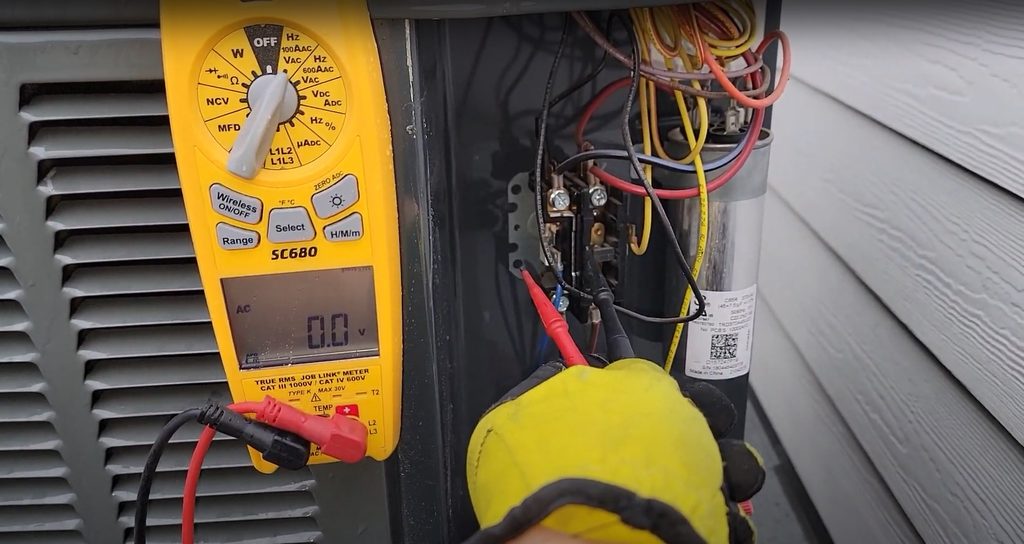
Our diagnostic process may include:
- 🔍 Electrical inspection: Examine the contactor, wiring, connections and visible signs of overheating.
- ⚡ Voltage testing: Check the electrical supply and low-voltage control signal.
- 🔌 Contactor testing: Determine whether the component engages and releases correctly.
- 🛠️ Repair or replacement: Install the correctly rated replacement when necessary and address any related damage.
- ✅ System verification: Confirm that the compressor and condenser fan start, operate and shut off normally.
What if the contactor is working correctly?
Sometimes, the contactor is perfectly fine.
Other possible problems include a tripped breaker, faulty thermostat, interrupted low-voltage signal, damaged wiring, failed capacitor or condensate safety switch.
Identifying the actual cause helps prevent unnecessary part replacements.
💰 7. How Much Does AC Contactor Replacement Cost?
Typical published U.S. replacement range
$200–$450
General estimate for professional replacement, including parts and labor. Actual local pricing and diagnostic charges vary.
The contactor itself is a relatively small component, but professional replacement involves more than purchasing and installing a part.
The technician must accurately diagnose the problem, perform the repair safely, select the correct component and verify that the equipment operates properly afterward.
Additional repairs may be necessary if the failure has also damaged wiring, terminals or other electrical components.
A contactor failure alone generally doesn’t justify replacing your entire air-conditioning system.
🛡️ 8. Can Regular HVAC Maintenance Help Prevent Contactor Problems?
Regular HVAC maintenance allows technicians to identify certain electrical problems before they cause an unexpected breakdown.
During maintenance, an inspection may reveal:
- 🔍 Worn or deteriorating electrical contacts
- ⚡ Loose or damaged electrical connections
- 🔥 Signs of overheating
- 🔊 Abnormal contactor operation
- 🛠️ Other components that need attention
However, not every contactor requires preventive replacement. Its actual condition and electrical performance should determine whether replacement is necessary.
In the demanding Texas cooling season, having the system inspected before peak summer temperatures can help identify certain problems before they interrupt your home’s cooling.
❓ Frequently Asked Questions
Can a bad contactor prevent my AC from cooling?
Yes. If the contactor doesn’t close when the thermostat calls for cooling, the outdoor compressor and condenser fan may not receive electrical power.
Why does my AC contactor make a buzzing noise?
Buzzing or chattering may indicate unstable control voltage, a deteriorating coil or another electrical problem. An HVAC technician should test the component and its control circuit.
Can a bad contactor make my outdoor AC run continuously?
Yes. Electrical contacts that become welded together may remain closed after the thermostat stops requesting cooling. Other control problems can produce similar symptoms.
Can a bad contactor trip the circuit breaker?
A damaged contactor or related wiring fault can cause a breaker to trip under certain conditions. However, repeated breaker trips can also indicate compressor, motor or circuit problems.
Can I replace my AC contactor myself?
We don’t recommend it. Outdoor AC equipment contains high-voltage electrical circuits, and capacitors can retain stored electrical energy even after the system is disconnected.
How long does an AC contactor last?
There is no guaranteed lifespan. Electrical switching frequency, environmental conditions, component quality and electrical operating conditions all affect its service life.
Does a failed contactor mean I need a new AC?
Usually not. An isolated contactor failure is generally a component-level repair. The overall condition of the system should determine whether additional repairs or replacement are necessary.
🔧 Outdoor AC Won’t Turn On or Shut Off in Dallas–Fort Worth?
If your outdoor air conditioner won’t start, keeps running or makes unusual electrical noises, don’t ignore the warning signs.
Airmatics provides professional AC diagnostics and repairs throughout Plano, Frisco, Allen, McKinney, Dallas and surrounding North Texas communities.
Our technicians can identify whether the problem involves the contactor, capacitor, compressor or another electrical component and explain the available repair options.